Tag: distance teaching

  • How to promote learning in distance teaching?

    How to promote learning in distance teaching?

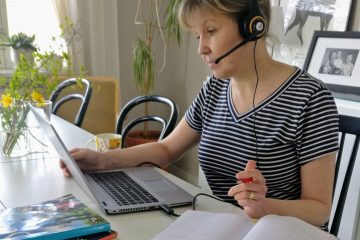
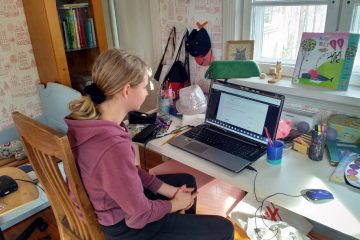
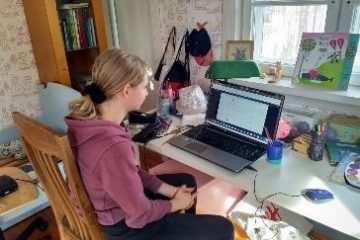
    Teachers around the world have been struggling with distance teaching. During the pandemic, many of us were thrown to deliver our classes distantly without proper preparation or training for it. Many teachers were deeply concerned how much students were actually learning when studying remotely. They were asking: “How to really promote learning in distance teaching?”

    Learning can happen anywhere!

    Even though we had to change the mode and delivery channels of teaching abruptly, learning itself has not changed. When talking about distance teaching, many people focus on different gadgets, latest apps etc. without proper thought how do students actually learn remotely.

    Learning remains the same whether people are learning face-to-face or remotely. The same principles that scientific research has revealed about learning apply also in distance teaching. If we want to promote learning distantly, we need to take those principles into consideration.

    The modern learning theory has pointed out several facts about learning:

    • Students learn better when they feel safe and know each other.
    • Prior knowledge has huge impact on learning.
    • New knowledge must be integrated to prior knowledge.
    • Learning demands learner’s own activity.
    • New knowledge must be applied in order to be truly learned.
    • Collaborating with other people enhances learning.
    • Physical activity promotes learning.
    • Reflection improves learning.
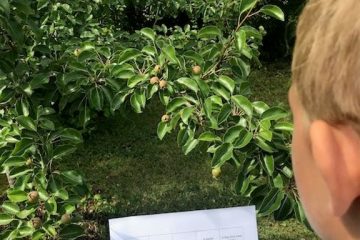
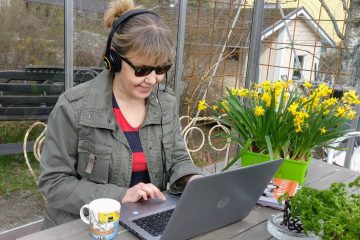
    New knowledge acquisition outdoors

    How well are these facts taken into consideration when teaching remotely? Do we take time to create safe, positive atmosphere to our distant teaching classes? How do we map the prior knowledge students have about the new topic before adding new information? How do we activate students and give them possibilities to apply new information? Do we give students possibilities to interact and collaborate with their peers? Do we have breaks in distant teaching and take care of the holistic well-being of students? Do we encourage and give time for reflection in distance teaching?

    Maybe it’s not about finding another nice gadget or quick quiz when trying to ensure good learning results in distance teaching? Maybe we need to pay more attention to the pedagogical quality of distance teaching.

    If you want to get more ideas of pedagogically smart lesson structure or versatile, engaging teaching methods in distance teaching, please check LessonApp distance teaching guide available in Premium version!

  • 12th lesson for 2020: foreign language lesson in distance teaching mode – an article of Chinese rivers

    12th lesson for 2020: foreign language lesson in distance teaching mode – an article of Chinese rivers

    Author: Gracie Meng-Pitkänen, worked as a Chinese teacher in Finland and China

    I have practiced distance teaching for several months with my small group of students since the Covid-19 pandemic started in Finland this spring. Overall, the outcome is very positive. Thanks to LessonApp which provides distance teaching methods on time at critical turning point of moving from classroom teaching to remote teaching.  The lesson below is built with help of distance teaching methods included in LessonApp.

    1. Warm-up (5 mins): 3 things (distance teaching)

    The teacher asks one of the students to begin the warm-up by saying “Three things…” and ending the sentence with a question such as “Three things you like about the summer?”. The student who posed the question points to another student who then answers the question with three things, e.g. “Ice cream, the sun, spending time with my friends”. The student who answered the question makes up a new question of three things and points to another student who will answer it. You can play as long as everyone gets their turn to ask and answer.

    Ask the students to say 3 things related to rivers. The words they maybe come up include the words they know, e.g. ‘long’, ‘big’, ‘clean’. If not, then give them hints by showing pictures.

    2. Orientation/Pre-existing knowledge (5 minutes): Admit slips (distance teaching)

    Begin with telling the students the lesson’s theme. Ask them to write down a question on the piece of paper that they would like to have the answer to during the lesson. Students should be given a few minutes time to write down the question on their slips. After they have finished writing, tell them to put the slips aside for the remaining lesson: the slips will be revisited at the end of the lesson. Use the end of the lesson to review the slips. Tell the students to look at their slips to see whether their questions have been answered. If not, now is the opportunity to ask the teacher directly. If there is not enough time to answer all the questions, the students can send the questions to the teacher by email. The teacher can respond to the email or answer during the next lesson.

    Tell the students that the theme of this lesson is about two famous rivers in China. Each student writes down one question on a paper related to the rivers. This is to activate shortly how to make sentences with the words they know regarding rivers, e.g. ‘ is the river long?’

    3. New knowledge acquisition (15 minutes): Search information (distance teaching)

    The teacher guides the students on where and how to find essential information.

    Guide the students to search for the information on Internet about the most famous rivers in China and find the key information:

    • What are their names?
    • What are their nick names?
    • What are their characteristics?
    • Which location in China are they?

    4. Practicing (20 minutes): Activating writing assignments (distance teaching)

    During the exercise, students are asked to individually write down their own thoughts and knowledge about the topic at hand.

    Activation/practicing: After studying the topic for a while or listening to the teacher’s presentation, for example, ask your students to write down what they have learned so far, what was new information to them, what they do not yet understand thoroughly, what they would like to learn next etc.

    Reflection: Ask your students to write down what they have learned about the topic, what was new to them, was something left unclear, how did their views or knowledge of the topic change during the lesson and so on. It is extremely useful to do this exercise both before and after studying the topic so that the students can see how their thoughts have changed.

    Write down the names of the rivers and 3-5 key words based on what is found on Internet. Open the textbook and read about the rivers. Compare the words in the book and found by themselves. At the end, each student checks if his or her question written down in the beginning of the lesson has got an answer or not. New words/phrases they are supposed to learn from the book: name, mother, love, ancient, middle of.

  • 11th lesson for 2020: Collaborative storytelling

    Author: María Carrasco Orozco (M.Ed) Working as a preschool teacher in Tiny Hands English Kindergarten

    This lesson is designed to improve students’ confidence when speaking in a new language, as well as to grow their vocabulary. 

    It is intended for children from 6 years old to the end of primary education (but with modifications it can be used with adults as well) and it all depends on their language capabilities at the moment. I have done this lesson with my students in class, but now I bring an online version that can be carried out during distance learning and works as well.

    General learning objectives
    • Practice and grow vocabulary 
    • Review grammar structures 
    • Get confident using the language 
    • Foster creativity
    Materials

    The original material is called story cubes, but for the sake of the distance learning we will have to use an online resource. The teacher can create their own online dice with specific vocabulary or this type of resources can be used instead, with fixed vocabulary:
    https://scratch.mit.edu/projects/158896002/

    *Tip: If the learners are old enough, you can create a project around it and ask them to create their own story cubes online resource, using the platform Scratch.

    Grouping and Warm Up: 

    Method: Three Things

    The whole group can take part in this activity together. It is thought of as a warm up to activate learners’ vocabulary.

    It consists of asking students to think of three things related to a topic. The question could be: Tell three things that you love about summer, three Christmas things, three red objects, three fruits that come from a tree, etc. 

    If the learners are advanced enough you can group them and ask them to think of the questions by themselves and ask them to each other.

    Groups: Three or four per group

    You can use the affordances of the software that you’re using to reach your students or in the case of a lack of grouping options you could have the whole class participate, although it might be more challenging for the learners to keep their attention.

    Story Time!:

    Onced decided the groups it is time to play. 

    Image 1: This is how the software looks after pressing Go!

    Version 1: For beginners.

    One student shares their screen and clicks on “Go!” to roll the dice.

    That person has to start to tell a story using one of the images from the dice. Ex. Once upon a time there was a monkey. His name was Joey and he lived in the rainforest. The next person of the group will have to continue the story using another image from the dice, ex. One day, Joey saw a print of the ground that was new to him, it didn’t resemble any other animal footprint. Then the next member of the group will continue and so forth until they have used all the images and the story is finished.

    Version 2: For more advanced learners. 

    This time every student will have to tell the whole story by themselves, screens can be shared to show the images to all the rest. This is a more complex way since the learner has to come up with a whole story by themselves. 

    *Tip: It might be a good idea to work beforehand on connectors, such as then, after that, however, because, finally, etc.

    Enjoy! 

  • Distance teaching – a challenge and an opportunity for teachers

    Distance teaching – a challenge and an opportunity for teachers

    Many teachers have had to carry out their teaching remotely due to the global pandemic. This has been a huge challenge for the teachers around the world as they have had to change their way of teaching to be done remotely.

    However, many teachers have not been trained to provide distance teaching and they may lack ideas and knowledge on how to plan and implement effective and motivating teaching remotely. Therefore, we created a new feature to LessonApp about distance teaching. Now LessonApp Premium has a section with key pedagogical principles of distance teaching, an example of a pedagogically smart lesson structure for distance teaching, and also several distance teaching lesson plans to browse and apply.

    Distance teaching requires different type of pedagogical solutions than classroom instruction. Although the teacher can still “teach” in a traditional sense, the role and tasks of a teacher are rather different in distance teaching than in classroom instruction. Teacher’s tasks in remote teaching include more planning and guiding and less direct teaching. Teacher needs to gather relevant material (online links, quizzes, videos etc.), formulate meaningful assignments that can be done remotely, guide interaction and evaluate different assignments.

    In remote teaching there is endless amount of possibilities: different learning environments, platforms, tools, applications, software, digital material, videos, multimedia presentations etc. By trying out different tools and applications it is easier to find those solutions that are suitable for teacher and as well as students.

    Art class exercise: Mandala

    In distance teaching teacher should focus on quality over quantity! Too many assignments can be harmful especially for students with learning difficulties, as well as to those, who are very diligent and demand a lot from themselves. The key question is: “How do I plan a remote learning experiences so, that it is suitable for learners’ skill level and competence, it does not stress out students, and it also forms a meaningful learning experience?”

    Distance studying is demanding for most of the learners. Studying remotely, mostly alone and possibly from your own home, requires time management skills, self-directedness, self-regulation, responsibility and advanced studying skills. These can be challenging even for adults, let alone children. Support from parents (if possible) and teacher is crucial.

    The transition to distance teaching is a learning situation for everybody. Often teachers and students are thrown to distance teaching abruptly and there is no time to proper planning. In the beginning, it takes more time and energy to learn the new ways of studying and get familiar with new technical solutions, so learning the new contents can be tough. It is essential to give time to the process and retain a growth mindset: appreciate effort, try to constantly learn (also from mistakes) and look positively into future.

    Distance teaching is a challenge, but it can also be an opportunity for teachers to develop their own professional skills as well as get a new tool in their own professional toolkit.

    Team LessonApp is ready to help teachers by sharing pedagogical knowledge and tips! More detailed information how to promote learning and produce better learning results in distance teaching can be found in LessonApp.

  • Bingo method – an example of distance teaching methods

    Bingo method – an example of distance teaching methods

    Playing Bingo outside!

    With Bingo method, students walk around searching for things. The method motivates children to study in an active and fun way.

    The teacher creates a bingo sheet and sends it to each student. The bingo sheet can be a 5×5 grid, for example.

    Each grid box has a word or an image. The student’s task is to find the agreed number of words or images: things like a tree or a vehicle or a traffic sign etc.

    It would be good if at least some of the things the students are looking for are outside. Bingo method is a good outdoor exercise.

    If a student finds 5 things in a row on the grid, he gets a bingo.
    To get a bingo, the things in the grid can be positioned in a row vertically, horizontally, or from corner to corner.

    Bingo method is one of the distance teaching methods in LessonApp. It can be found in the building block of Practicing / activating students.

    Check out Bingo method and over a hundred other methods with detailed method descriptions in LessonApp: https://lessonapp.fi/download/

  • 9th lesson for 2020: Math for 8th graders, Introduction to Percentages

    9th lesson for 2020: Math for 8th graders, Introduction to Percentages

    Author: Meri Ahonen, LessonApp co-founder and math, chemistry and physics teacher in lower secondary school, Nokia, Finland.

    This lesson is an introduction about ‘percents’. Students get acquainted with percents during primary school but of course we will recall the basics at 8th grade before starting to solve more difficult problems.

    At first I will explain a couple of principles of my distance teaching this Spring:

    • I used mainly Google Meet and GSuite (Classroom, Forms, Docs, Sheets….) for distance teaching. I shared documents, instructions, videos, exercises, etc. in Google classroom group. Students were familiar with it before distance teaching.
    • My groups had weekly goals. Students got the amount of stuff to do depending on how many lessons they had each week. They could choose when they did it and reported in their own learning diary (when, what, was it easy/ok/hard, any questions…).
    • Mathematic groups had compulsory online meetings at the start of every lesson. We continued using students’ normal schedule which was used before distance teaching.
    • In online meetings I presented theory and/or showed examples. After the shared start, student get to choose: either continue by themselves with the exercises from Math book or stay online to practice together with more examples if they wished. No matter what choice they made, every one needed to write a brief report to his/her learning diary.
    • I stayed online during the whole lesson so students could ask for help. I shared materials and some videos to classroom to support learning by themselves.
    • At the start of distance teaching I tried to sharpen the idea that students are doing this for themselves, not for me.

    This time I only used one teaching method, the other block is about students choosing how to practice.

    Percents in groceries

    1. Search information (30 min)

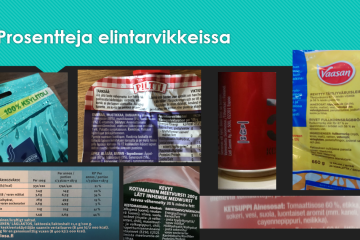
    Students will look for percents written on everyday things: They try to find three different items from, for example, food, drink, cleanser, and electronics, and then check the item’s contents, news, internet, or sales packages. They take pictures of their findings and return them to Google classroom exercise.
    (15 min for searching and taking pictures and 15 min for returning them to Google classroom.)

    Percents in statistics, tax and shares.

    I collected students’ findings in a powerpoint and presented them later on, when we did a small project about percents in advertising.

    2. Choose a working method. (30 min)

    Students can come to online meet to listen theories and do exercises from Math book together or start learning by themselves and report to learning diary. They can come back to online meet whenever they need help.

    Students will choose exercices from Math book (in Finnish) using this table. Each row represents examples of daily amount of exercises. They can choose to do minimum (“minimi”) or a bit more from good (“hyvä”) and excellent (“erinomainen”) columns.

    At the end of each week I will check the learning diaries. I will comment how it is going on, answer questions, and give example answers; if there are no markings, I try to connect with the student and investigate what is going on.

  • How is LessonApp being of service to the educators and students during Covid-19 crisis?

    How is LessonApp being of service to the educators and students during Covid-19 crisis?

    This blog post is part of Maltese radio interview with Johanna Järvinen-Taubert in May 2020, 3/3. Radio interview was arranged by Dr Kenneth Vella, headmaster of the St Joseph Mater Boni Consilii school in Paola, Malta.


    LessonApp is a Finnish mobile tool for teachers to plan more inspiring and efficient lessons for their students. LessonApp is based on modern Finnish pedagogy and it provides a huge amount of new, practical ideas to develop one’s teaching.

    LessonApp has now users in 123 different countries. We have been fortunate to receive positive feedback and good ideas from our users to develop LessonApp to be even more useful for teachers.

    Now that schools have been locked down in so many countries and teachers need to get familiar with distance teaching in a very tight timeframe and with very little support, we are producing more tools and pedagogical aids for distance teaching as well. Within a couple of weeks, LessonApp will have a comprehensive introduction to distance teaching in practice, plenty of useful methods for distance teaching and several ready-made lesson plans for distance teaching, too.

    LessonApp is dedicated to help teachers and ease their workload. By helping and supporting teachers, we wish to support students as well. By helping teachers to plan and carry out even better teaching easily, we hope to support the students to get quality education, which is our ultimate goal. LessonApp is eager to receive feedback and ideas from users to better help and support teachers in their work, also during these challenging times.

    With LessonApp we are also busy preparing several language versions of LessonApp. In coming months LessonApp will be translated to Spanish, Portuguese, Russian, Romanian and Burmese. We are excited that already during this year more teachers will be able to use LessonApp and benefit of it in their own mother tongue. LessonApp team is sending their warmest greetings to all teachers around the world! Your work is invaluably important, also in these challenging times!

  • How was distance teaching carried out in practice in Finland?

    How was distance teaching carried out in practice in Finland?

    This blog post is part of Maltese radio interview with Johanna Järvinen-Taubert in May 2020, 2/3. Radio interview was arranged by Dr Kenneth Vella, headmaster of the St Joseph Mater Boni Consilii school in Paola, Malta.

    First of all, the school ensured that pupils receive equipment and supplies from school so that they could participate in distance learning. Schools could lend equipment, especially if a child did not have a computer, a laptop or other mobile device at home. Some municipalities also arranged free school lunches for pupils participating in distance teaching.

    The most commonly used digital platforms and applications in Finland are Wilma, which is widely used Finnish digital platform and web service, Microsoft Teams, Google classroom and Moodle. Also, Finnish publishers provide a lot of digital exercises and material online.

    Teachers were really innovative when planning assignments for students in distance teaching. They used creatively home as a learning environment. Here are a couple of examples:

    • For instance, my twelve-year-old daughter along with her classmates was asked in environmental science lesson to check all the hinges at their home and if needed to tighten them or grease them.
    • In subject called Crafts the second graders (8-9 years old) were asked to check all the fire detectors at home, do the vacuum cleaner maintenance, check, what kind of tools they can find in their house and for what they are used for.
    • In home economics subject 7th grade students (13-14 years old boys and girls) were given assignments to bake for Easter and tidy up the contents of kitchen storage cabinets. All parents loved this assignment 😊!
    • In chemistry the 8th graders did science experiments with red cabbage, baking soda and different cleaning liquids at home.
    • Also, projects related to upcycling useless home items into new products have been another way to practice academic and practical skills at home. For instance, my 12-year old daughter was asked to design a robot out of recycled materials she could find at her own home.

    All these assignments show, that Finnish education puts a lot of value on learning skills needed in life.

    Parents have an obligation to ensure that their child participates in distance learning arranged by the school. In general the most concerning issue for students and parents was the amount of assignments teachers were giving to students. It seemed that some teachers had given too many exercises to students and the students had been overwhelmed by them. Usually, open communication between parents and teachers helped in this kind of situations.

    What has been remarkable to witness, is the readiness that most of the pupils and students had for distance studying. It is amazing, how tech-savvy and self-directed they are, how capable they were handling different applications and channels, and how responsible they were in their studying in general. The emphasis on self-directedness and multimedia literacy in Finnish schools was really paying off now.

    Of course, this was not the case with all children. What worried people most in Finland, is how students with different needs for support were coping with this current situation. Not everyone was capable of self-directed guiding of their studies and many students would have needed different types of support. Not everyone had parents all the time at home to help them, either. We were really striving to find workable solutions for these students also in these times, but the situation raised concerns.

    The general attitude in Finland is, that this situation we had will change the teaching methods and habits also after the pandemic. Many teachers and students noticed the advantages that digital aids can bring to teaching and these solutions will most certainly be used much more in the future, too.

  • How has Finland coped with the Covid-19 crisis?

    How has Finland coped with the Covid-19 crisis?

    This blog post is part of Maltese radio interview with Johanna Järvinen-Taubert in May 2020, 1/3. Radio interview was arranged by Dr Kenneth Vella, headmaster of the St Joseph Mater Boni Consilii school in Paola, Malta.

    The Covid-19 pandemic has hit Finland as it has hit all the other countries. There was a lockdown in the whole country, as there were restrictions for public gatherings. People were instructed to work remotely from home, if possible. Also, all schools were closed since mid-March till mid-May.

    So, from normal daily work in Finnish schools and classrooms, the whole education system was changed to distance teaching literally during one day. As in many other countries, this has never happened in Finland before.

    Teachers had practically only one day to prepare for distance teaching in Finland. Distance teaching has been used mostly in higher and adult education before this pandemic in Finland. So, changing the contact teaching to distance teaching mode was new to almost all teachers in basic and upper secondary education.

    However, there has been a strong push to use more digital devices, applications and digital materials in regular, face-to-face teaching in Finland for several years already. Our current curriculum emphasizes the use of digital material and devices in all subjects strongly. So many of the teachers had some experience of the digital applications also before this. Of course, teachers had very different competences with e-learning and digital aids: some of them had only a little experience with devices and applications, whereas some of them had a lot of experience and very advanced skills with them.

    But this current situation forced all the teachers to adapt and learn new skills in a very short time. Considering this, the change happened surprisingly smoothly. Teachers, principals, students and parents have all been amazed, how well distance teaching and studying has worked. To our point of view, a generally strong professional and pedagogical expertise of Finnish teachers has helped a lot in this transition.

  • 8th lesson for 2020: Social studies lesson for 9th graders (basic education) in distance teaching – Finnish parliament and legislation

    8th lesson for 2020: Social studies lesson for 9th graders (basic education) in distance teaching – Finnish parliament and legislation

    Author: Satu Herrala (M.A.) special education teacher in lower secondary school (grades 7-9), Takahuhti school, Tampere, Finland

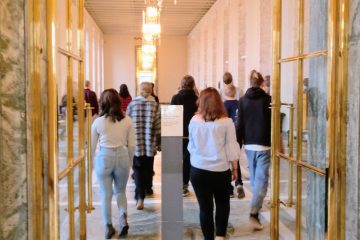
    In February, before the Covid-19 pandemic reached Finland, my class of 9th graders made a field trip to the Parliament house in Helsinki. The hostess of our visit was a Finnish MP Hanna-Leena Mattila who told us about the work of an MP. The students also had a chance to ask questions that they had prepared at school.

    Back in school, we were supposed to study the process of legislation and the duties of the Parliament more closely. Then all of a sudden, the school was closed due to Covid-19 and we moved to distance learning. That literally happened overnight. We started using Microsoft Teams software tool and continued studying online. In social studies, the shift to distance learning was relatively easy. This is a description of our double lesson on the topic The duties of the Finnish Parliament.

    Warm-up

    In my class, we often use fixed groups, so we didn’t really have any grouping at the beginning of the lesson. If groups are created at the beginning of the lesson, you can easily use the grouping activities presented in LessonApp. To warm-up and to create a learning-friendly atmosphere we used a set of emojis, which I shared via Teams. The students picked an emoji which described their feelings and posted it in our WhatsApp group. The idea was to share the feelings of the day and about the topic.

    Orientation – learning teams + mind mapping

    To focus on the theme, the students first collected their pre-existing knowledge on the topic. In this case my students already had quite a lot to build on because of our visit to the Parliament.

    First, I asked the students to draw (using only one colour) a mind map of what they already knew and remembered about the Parliament. This was done in small groups in Teams. At the same time, we practised how to use the channels for group work in Teams. The map was then presented to the whole class in Teams.

    New knowledge acquisition – small group discussion

    The students worked in groups of three to learn new things about the Parliament. The groups got the same set of questions, which they answered using their study books and the internet. I shared the students some links to useful websites where they could find accurate and reliable information.

    The teacher and the assistant visited the channels and helped the groups and made sure that everybody was working. The groups had free hands to decide how they wanted to organize their work, but they had to have a plan for that.  

    Practising and activating – teaching discussion

    Based on the knowledge the groups had acquired, they now made questions to the other groups. In the discussion at the end of the class when the students linked their new knowledge to their prior knowledge and experiences, they came up with some new questions about the Parliament and the work of MPs. The students then decided to write down the questions and mail them to the MP we had met in the Parliament.

    Reflection

    At the end of the lesson, the students completed their mind maps (using a different colour) with new things they had learned during the double lesson.

    Bonus Block: Rehearsing

    Due to Codiv-19, the members of the Parliament decided to help the students in Finland and made a series of presentation videos about the Parliament (https://edustajalive.fi/). We watched the videos and rehearsed what we had learned.