
Month: February 2020

  • Key flag means ‘Made in Finland’

    Key flag means ‘Made in Finland’

    “Key Flag Symbol is a registered collective mark. It demonstrates that the product has been manufactured or the service has been produced in Finland, creating Finnish jobs.” (https://suomalainentyo.fi/en/services/key-flag/)

    The Association for Finnish Work, The Key Flag Symbol Committee has awarded our company with Key Flag as we give recognition to Finnish work and the values that define the Finnish society.

    This mark recognises that the service has been produced in Finland. The domestic content of a product or service must be at least 50 percent, the average is more than 80 percent. Companies must also have significant domestic ownership, and the management and the company’s head office must be located in Finland.

    LessonApp is 100% made from Finland and now we have this well-known proof about our origin.

  • 3rd lesson for 2020: Emotions with a gadget

    3rd lesson for 2020: Emotions with a gadget

    Author: Elena Chukhlantseva

    Emotional intelligence is a hot topic these days. It is commonly known that the emotional competence of a person develops throughout their life. Early years is a particularly crucial time for supporting the child in their emotional learning that is intricately interconnected with fast-developing cognitive, social and physical skills.

    It is a complex and challenging task for a young child to understand their own and others’ emotions and underlying feelings, to express their own emotional states as well as to regulate their own reactions and behavior. For strengthening and advancing various emotional skills the child needs to be at a certain age and level of development. Therefore, it is necessary to have a conscious and realistic approach to the adult’s expectations from each individual child. The adult working with the child needs to distinguish between what the child can already do by themselves, what the child can do if support is provided, and what is still beyond the child’s zone of proximal development.  

    Emotional learning progresses in a cumulative manner to a wider scope and degree of in-depth understanding of the realm of emotions. Teaching and learning emotional skills is a process that requires routine, consistency and persistence of effort. One aspect is a must to remember from the start: anything the child feels, in any way they react, the child needs to be understood, accepted and supported as they are.

    There are many ways to integrate the learning of emotional skills throughout the day as a part of any action from morning greeting to the afternoon outdoor time. I created my lesson ‘Emotions with a gadget’ for young children aged 4-to-6 years old with the help of LessonApp Premium. The aim of the lesson is to practice recognizing and understanding various emotions in a playful way. During the lesson, the children use a digital device (e.g. a tablet, iPad, video camera). 

    1. Warming up (5 min)

    Method used: Symbol work

    The objectives of this exercise are to introduce the topic of the lesson, to connect to each child’s world, to give the names to different emotions. 

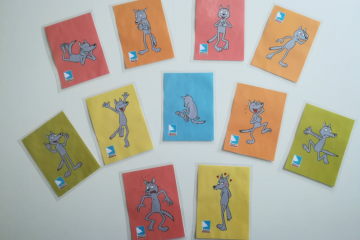
    A teacher lays down several emotion cards for children to choose from. Alternatively, the children can draw a card that describes how they feel at the moment (this option may take extra time). Discuss in a group what makes them feel like that, what other situation may make a person feel the same way. Think together, for instance, what means to be empathic, how empathy connects to own feelings and how it helps others.

    2. Practicing (45 min)

    Method used: Role play, Multimodality

    The objectives of this part of the lesson are to help the children work out various situations involving emotions and to encourage expression through creative play. A mix of modalities like SoundSmart, WordSmart, PeopleSmart, Image Smart and BodySmart allows for engaging the children’s senses and multiple skills areas in a holistic way.

    1. Choose 2-4 stuffed toys or puppets for the role play. Prepare a digital device for video-recording.

    2. In a group, discuss and develop “non-happy ending” situations with different roles for the stuffed toy characters. The example situations can be a situation when somebody is left alone, while others play together; or somebody says something wrong and others start laughing at that character and so on. Decide on one situation that can be turned into a play with the toys or puppets.

    3. Prepare the children for the play. Ask them to set the stage for the play by using available toys and supplies (blocks, boxes, small word toys, etc.) as props. Decide together with the children on their tasks during the play and divide the children into small groups accordingly: the first group comes up with the appropriate sound background, the second group performs actions with the toys, the third group speaks for the roles of the toys, and the fourth group records the video of the play.

    4. Let the action take place.

    5. After the role play is finished, watch the video with the group and discuss e.g. how the characters may feel in the situation, why the situation has happened, how the situation may continue, how the situation affected other characters in the play, etc. The teacher makes sure that the children get their turn to participate in various tasks throughout the role play.

    6. Next, think of alternatives to how the situation could have been taken forth differently. Develop a different scenario for the situation with “a happy ending”. Make a new role play and record a video.

    7. (Optional extension)

    The aim of the extension is to move the action from the toy world into the children’s own world. Instead of acting out the situation with toys, the children can perform themselves. The video can be taken in one go or in parts. It can then be edited with any suitable application (e.g. MovieMaker). It is necessary to ask for the guardians’ permission to video record the children prior to the lesson.

    3. Reflection (5 min)

    Method used: Inside-outside circles

    The teacher asks the children to formulate in their minds two or three things they liked about the lesson the most. Inside-outside circles are formed. The teacher gives the children 10 seconds for each stop before the move to the next partner in the opposite circle.

    Videos as the result of the project work can be presented to e.g. another group of children, parents and so on.

    You can find this lesson plan in LessonApp.

  • 2nd lesson for 2020: Mother tongue lesson: Using capital letters for proper nouns (Primary school)

    2nd lesson for 2020: Mother tongue lesson: Using capital letters for proper nouns (Primary school)

    Author: Päivi Valtonen

    UNESCO report states that about 40% of the global population does not have access to education in the language they speak or understand. Studies have shown that there are many benefits why students should have a right to study using their own mother tongue at school.

    Using the mother tongue leads to a better understanding of the lesson contents. It is difficult to learn, if one does not even know the meaning of the words. Starting pre-primary or school in the learners’ own mother tongue helps acquisition of the skills and attitudes needed for success in formal education.

    The possibility to use one’s own native language promotes a positive attitude towards a school, and it’s easier for learners to see the relevance of school to their lives. Learners are also more likely to engage and become active owners of their learning process. When learners get more involved in the learning process, it speeds up the development of their basic literacy skills and leads to better educational outcomes.

    Mother tongue plays an important role in learning; it is the basis of all learning. Strong mother tongue skills appear to facilitate better learning in the other academic subjects (natural sciences, history, religion or ethics and so on), because they all are based on reading comprehension.

    I have used LessonApp Premium to plan this mother tongue (Finnish) lesson for 3rd graders. The topic of my lesson is proper nouns. During this lesson, students will practise using capital letters for proper nouns. The length of the lesson is 45 minutes.

    1. Warming up (5 min)

    Method used: Bouncing bunny

    The goal of this short exercise is to promote interest among students and attract their attention. Creating a good atmosphere for learning is important too.

    Students throw a soft toy, and whoever catches the toy can tell a proper noun (a name, a city, a country, an address…). Then the student throws the toy to someone else who will continue saying another proper noun. The soft toy is thrown for as long as every student has caught it at least once.

    The aim of this exercise is warming up, but also helping students to understand what are the proper nouns and what is the difference between common and proper nouns. The proper noun examples given by other students can promote understanding.

    2. Practising (20 min)

    Method used: Inside-outside circles

    One of the goals of the mother tongue lessons is to teach students to work in different interaction situations. Learning to share your own thoughts, experiences and feelings is important part of teaching the mother tongue. Inside-outside circles method is based on co-operative learning and it develops students’ interaction skills.

    Students are divided into two even groups. One group forms the inner circle and the other the outer circle. The students in the inner circle face outwards, and those in the outer circle inwards. Each student faces another: this is how students form pairs.

    Each student has a bunch of small cards. There is a word in each card, for example, TAMPERE, SUNDAY, ICELAND, TEACHER, DONALD DUCK, ITALIAN, MIDSUMMER, EUROPE, SOFIA, and so on. Now student pairs will practice using capital letters for proper nouns. They ask each other, word by word, which words need a capital letter. 

    After a while, either of the circles moves one person or more to the right or to the left so that everyone is facing a new person. The exercise continues with the new partner. Students can also come up with new words.

    It is important that students discuss unclear cases and try to figure out the right answer together. Of course, they can always ask teacher for help.

    3. Practising (15 min)

    Method used: Other method

    Students make exercises on proper nouns individually. They can use their mother tongue exercise book or digital learning material on the Internet or other worksheets with a variety of written exercises. Individually made written exercises consolidate knowledge that students have learned through doing the oral exercises with fellow students.

    4. Reflection (5 min)

    Method used: Up or down?

    All students stand up. They show their response by either reaching up or bending down: students reach as high as they can with their hands if they agree with the argument or to bend down if they disagree with it.

    “I’m happy with the way I studied today.”

    “I worked really hard today.”

    “I could have done better.”

    “I feel that the class supported me in my studying today.”

    “I enjoyed this lesson.”

    “I asked all the things I wasn’t quite sure about.”

    “I still don’t understand the proper nouns completely.”

    You can find this lesson plan and more detailed method descriptions in LessonApp. Feel free to join our LessonApp community and download LessonApp here.

    Reference

    UNESCO 2016. If you don’t understand, how can you learn? Global Education Monitoring Report. Policy Paper 24.

  • Edustudio Helsinki acts as a link between Romania and Finland

    Edustudio Helsinki acts as a link between Romania and Finland

    Edustudio and LessonApp came across in Dare to Learn 2018 when Edustudio’s chair person Bianca Biro came to talk with us in our stand. Bianca had found LessonApp on social media and wanted to collaborate. Of course we were open for collaboration partners and in the year 2019 we have really started to work together.

    Edustudio Helsinki develops Finnish-Romanian education co-operation by providing resources, training and contacts to educational actors, schools and individuals, and to support student exchanges between Romania and Finland. It is a non-profit organization, which is established in 2018. They also:

    • Provide new learning experiences and educational solutions for the promotion of a multicultural society and the teaching of one’s mother tongue via working with other associations in Finland and abroad.
    • Develop educational solutions and new resources for teaching Romanian to children and adolescents abroad.
    • Promote a positive image among Romanian youth and families of their ethnic identity, mother tongue and heritage.

    Edustudio Helsinki has translated LessonApp to Romanian and the language version will be available soon, stay tuned!

  • LessonApp webshop is open!

    LessonApp webshop is open!

    An important milestone has been reached: you can finally buy Premium licence from lessonapp.fi/shop!

    Basic version will stay free — forever. As a basic user you will get all the basic features like lesson planning tool and browse and apply other users lessons. You have an access to over 50 different teaching methods to choose from for lesson planning. You can also save ja print your lesson plan. All the pedagogical instructions and videos are available. If you are a new user, you will get to try Premium for free for one month.

    Premium licence has all the features available and it includes an access for over 150 teaching methods. There is a classification for methods for easier browsing which method to choose for the lesson plan. For the professional development Premium users get to use a self assesment tool to evaluate their own progression as lesson planner and as a teacher. And many more features to come, as Premium users will hear about them first!

    If you want to buy more than 10 licences, feel free to contact us [email protected] and ask for an offer! There will be features for communities like schools to use for their benefit.