
Month: February 2025

  • LessonApp project funded by Centre for Economic Development, Transport and the Environment

    LessonApp project funded by Centre for Economic Development, Transport and the Environment

    LessonApp got funding from Centre for Economic Development, Transport and the Environment to develop a School Manager Dashboard.


    LessonApp Ltd. has developed a mobile application for teachers, with an aim to spread it to teachers all over the world. The application is based on Finnish pedagogy and provides the teachers pedagogical support and a tool to plan lessons.


    The aim of the project was to develop an additional tool called School Manager Dashboard attached to the actual application. This will help admin and managers of a school to track usage of LessonApp, how actively teachers are using it and where support is needed.


    The goal of the project was to spread LessonApp to a completely new customer segment: schools, for school chains, municipalities and teacher training institutions. The project supported the company’s expansion from B2C model to B2B business model. During the project, the company developed a management tool intended for management – School Manager Dashboard – which enables getting schools and larger organizations as customers. A new, innovative management tool supports this through the company’s continuity, competitiveness and internationalization.

  • Free webinar Sustainability in Education

    Free webinar Sustainability in Education

    Free webinar Sustainability in Education

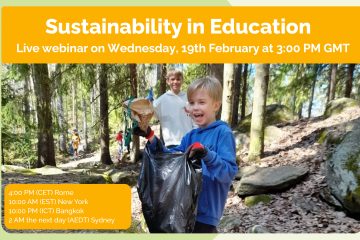
    We are running a series of webinars once a month. Join our upcoming webinar,
    Sustainability in Education” on Wednesday, February 19th at 3:00 PM GMT.

    How could schools take part in sustainability transformation in society? Education for Sustainable Development (ESD) is crucial as it equips individuals with the knowledge, skills, attitudes, and values needed to create a sustainable future. However, many teachers struggle to effectively integrate sustainability into their teaching. Learning Scoop’s sustainability specialist and trainer, Heidi Riikonen, will host a free webinar. Heidi will discuss the importance of ESD, its implications for teaching, and how to incorporate it into educational practices.

    If you are interested in Early Childhood Education, jump in and learn more!

    Recording is available for a limited time, if the time zone is not doable for you. Warmly welcome!


    Sign up here for online webinars

  • Designing lessons with LessonApp: The difference between science and pseudoscience (high school philosophy)

    Designing lessons with LessonApp: The difference between science and pseudoscience (high school philosophy)

    Author: Johanna Järvinen Taubert

    In the Finnish general upper secondary school (high school) curriculum, philosophy is one of the mandatory subjects. Philosophy is not only seen as part of the shared, cultural knowledge everyone should have an understanding of, but also a way to develop much needed thinking skills. Studying philosophy develops judgement and promotes the development of critical, creative and independent thinking. Philosophy supports the students in forming justified, independent views and their ability to participate in rational discussion.

    Essential part of the studying philosophy is to learn critical thinking. It is vital that students will learn to investigate the arguments presented to them, formulate and justify their own views, and to respect other reasoned views. Studying philosophy supports the students’ growth into active and responsible citizens with respect for one another.

    When teaching philosophy, I consider encouraging students’ own thinking, logical argumentation and rational, respective conversation to be the most important goals.

    In the Finnish national core curriculum for high schools (general upper secondary schools), there is compulsory philosophy course called Introduction to philosophical thinking. One of the objectives of the course is that the student “learns to evaluate the truthfulness of statements and develops skills in presenting and demanding justifications for different opinions and statements as well as perceiving the structure of presented justifications and evaluating their validity”. One of the core contents of the course is “the difference between knowledge and information, practical and scientific knowledge, and science and pseudoscience”.

    The topic of my lesson is “The difference between science and pseudoscience”. During this lesson we start to investigate the difference between science and pseudo-science. The length of this lesson is 75 minutes, which is the typical length of lessons in Finnish high schools. I’ve used LessonApp Premium to plan this lesson. You can find the whole plan and more detailed method discriptions in LessonApp. (download LessonApp here)

    1. Orientation to the topic (20 min)

    Method used: Lines

    Students are divided into groups of 4 by using cut postcards.

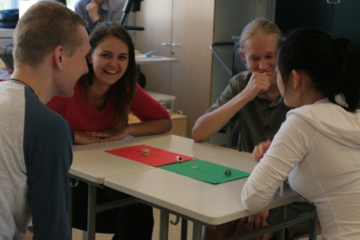
    There is a line marked on the students’ school desks by tape with two extremities. One end of the line is “Scientifically-proven”, the other “Pseudo-science, not proven scientifically”.

    Students get a set of arguments they face often in news or social media. Students must consider, if they think this statement is scientifically-proven or not (more like pseudo-science) or something in between and position their view on the line accordingly. Students place their pen or some other small item on their chosen position on the line and then discuss together, why they think this argument is scientifically-proven, pseudo-science or something in between. If they hear an argument that changes their view on the topic, they can change their position on the line. The goal of this exercise is to orientate students to the topic: to encourage them to think, how do we know, if arguments often presented in media are scientifically-proven or just beliefs. The exercise also aims to help students to learn to recognize trustworthy arguments and to carefully listen and analyze arguments presented by others.

    2. Aquiring new information 45 min

    Method used: Jigsaw (applied)

    Teacher will give a small introduction (5 min) of the debate between science and pseudo-science: how it is seen in our society, why is it relevant etc. Teacher will also explain the purpose of the next exercise: to help students to understand the fundamental differences between science and pseudo-science and to be able to investigate, if some arguments and theories are scientifically valid or not.

    The groups of four used in the previous exercise are now divided into two (two students in each group). Half of the groups are “red teams”, half of the groups are “blue teams”. Red and blue teams have different tasks:

    Red teams: Students find characteristics of scientific reasoning, arguments, theories and research

    Blue teams: Students find characteristics of pseudo-science, and how to recognize the pseudo-scientific arguments.

    Resources: own text book / digital learning material, useful links provided by teacher, newspaper articles

    All teams prepare a poster of the most important points of their topic.

    Here are some questions to help the teams to gather meaningful information:

    Red teams

    • What are scientific principles and method?
    • What is characteristic to scientific method?
    • How are scientific results produced and proven?
    • How are hypothesis developed and tested?
    • What is falsifiability of claims?
    • What is the role of controlling or boundary conditions in scientific theories?
    • What is the role of scientific community and peer review in evaluation of research results?
    • How does science evolve? What does self-correction mean?
    • Are scientific results absolute?

    Blue teams

    • What is the definition of pseudo-science?
    • What is characteristic to pseudo-science?
    • How is information gathered and examined, how are hypothesis developed and tested?
    • What does confirmation bias mean?
    • What is the stand for openness to evaluation by other experts?
    • What is the role of controlling or boundary conditions?
    • What is the role of confirmation and refutation?
    • What is the role of testimonial, anecdotal evidence, or personal experience?
    • What kind of progress or evolution is seen in the theories?
    • Give examples: what has been characterized as pseudo-science?
    • Why some people find the term pejorative?

    After gathering relevant information and making a poster, one red team and one blue team get together. Teams teach their contents of their poster to an other team. Groups of four discuss together, what are the major differences between scientific knowledge and pseudo-science.

    Goal of this exercise is to learn, how to recognize the fundamental differences between science and pseudo-science: how information is gathered, hypothesis and theories tested, what is their response to openness, refutation and critical investigation, how is the information / knowledge evolving etc.

    3. Reflection (10 min)

    The whole class will have a reflection together with the teacher. The class will reflect:

    • What did you learn today?
    • What was difficult / unclear?
    • What would we still like to learn more about?

    On the next lesson, groups will examine one case example more closely. Some of the cases are considered science-based and some pseudo-science. Groups choose one topic to study more closely. Teacher provides some case examples (like anti-vaccine movement, homeopathic remedies, healthy diet recommendations, astrology, evolution theory etc.), but students are free to choose their own example as well. At the end of the lesson each group decides their own topic and the homework for the group is find information about this case example and why it is considered either science-based or as pseudo-science. Following questions should be evaluated:

    • How do they justify their beliefs? What are the logicalmethodological, or rhetorical bases of the topic in question?
    • Are their signs of poor scientific reasoning? If so, what kind of?
    • What kind of practical or societal implications there are, if a theory is considered either scientific or pseudo-science?

    You will find the whole lesson plan in LessonApp.