These lessons continue the same theme the 15th and 16th lessons for 2020 started.
3. lesson (45 min)
Grouping
New knowledge acquisition Method used: Build-up group (45 min)
The students process the new information and draw conclusions from new knowledge.
Students form groups of four and they compare what they know about the topic as well as what kind of information they have acquired. Together, the students draw conclusions: how plastic affects the ocean life, and how to reduce plastic pollution. Students also look at their original posters and reflect on what they have learned. Students create a PowerPoint presentation on the information learned throughout the project.
4. lesson (45 min)
Practising / Activating students Method used: Other method (35 min)
Students deliver PowerPoint presentations to the whole class to share outcomes of their work.
Presentations
Reflection Method used: Exit slips (10 min)
Students answer the question on slips of paper: “What would be the one thing you would encourage people to begin doing to alleviate the plastic waste problem?” When everyone is ready, they read their slips aloud in turn.
You can find this lesson plan and more detailed method descriptions in LessonApp. Feel free to join our LessonApp community and download LessonApp here.
Reference Järvinen-Taubert, Johanna & Chukhlantseva, Elena 2020. Phenomenon-based Learning in Finnish Education. Unpublished manuscript.
Phenomenon-based learning is a part of Finland’s latest national core curricula for education of all levels from early childhood to upper secondary education (K-12), including basic education. The goal of phenomenon-based learning is for students to explore various real-life phenomena from different perspectives. Phenomenon-based learning is particularly well suited to the teaching of environmental and natural sciences, although it can be applied to all other subjects as well.
Phenomenon-based learning is based on student inquiry, collaboration and problem solving. During phenomenon-based learning process, students learn core contents of different topics, and also 21st century skills like teamwork, communication, critical thinking, problem solving, and digital literacy. Phenomenon-based learning empowers students to take ownership of their learning through active participation, diversification of learning objectives, working approaches and ways of assessment.
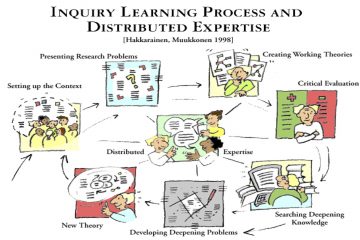
I have used LessonApp Premium to design these biology lessons for 11–14 years old students. The topic of my lessons is Plastic waste in the oceans. During these lessons, students will understand how plastic affects the ocean life, and how everyone can take a number of everyday steps to reduce plastic pollution. I have applied an inquiry-based learning method as a basis to plan these phenomenon-based learning lessons.
Plastic waste
1. lesson (45 min)
Orientation / Pre-existing knowledge Method used: Watch a video (10 min)
The goal is to orientate students to the topic. Orientation helps students to understand what is the topic of the lesson and prepares their minds for receiving and processing new information. Orientation also raises interest and motivation towards the topic.
Students watch a video about plastic waste and how it ends up in the oceans, and after a video they’ll have an open discussion to share their thoughts.
The teacher finds out what the students already know about the topic and what kind of opinions, explanations or theories they have.
The discussion continues with a pair. In pair discussion, partners help each other learn by discussing, revising and testing one another. Students also make a poster summarizing their thoughts.
Practising / Activating students Method used: Gallery walk (15 min)
The teacher helps students to process actively the subject matter by using teaching method (gallery walk) that requires learners’ input.
Students put up their posters on the walls. Students circulate around the classroom with their pair, look at the posters (at least three of them) and discuss about the topic with their pair.
2. lesson (45 min)
Practising / Activating students Method used: Pair discussion (10 min)
The teacher helps the students evaluate their knowledge critically.
Students stand in front of their own poster and reflect on what they know about the theme, what they don’t know yet and what should they find out.
Searching information
New knowledge acquisition Method used: Search information (20 min)
The teacher guides the students on where and how to find essential information.
Students in pairs search for new information on the internet. They try to find answers to the questions of the previous step: what they don’t know about the topic and what they should find out about it.
New knowledge acquisition Method used: Pair discussion (15 min)
New information or new problems can be identified after the deepening of knowledge.
Students in pairs reflect on new knowledge: what they learned more about the topic, how their knowledge developed, and what new questions they came up with. Students write for themselves short notes of these reflections.
You can find this lesson plan and more detailed method descriptions in LessonApp. Feel free to join our LessonApp community and download LessonApp here.
Two more lessons coming soon to continue this theme!
Reference Järvinen-Taubert, Johanna & Chukhlantseva, Elena 2020. Phenomenon-based Learning in Finnish Education. Unpublished manuscript.